
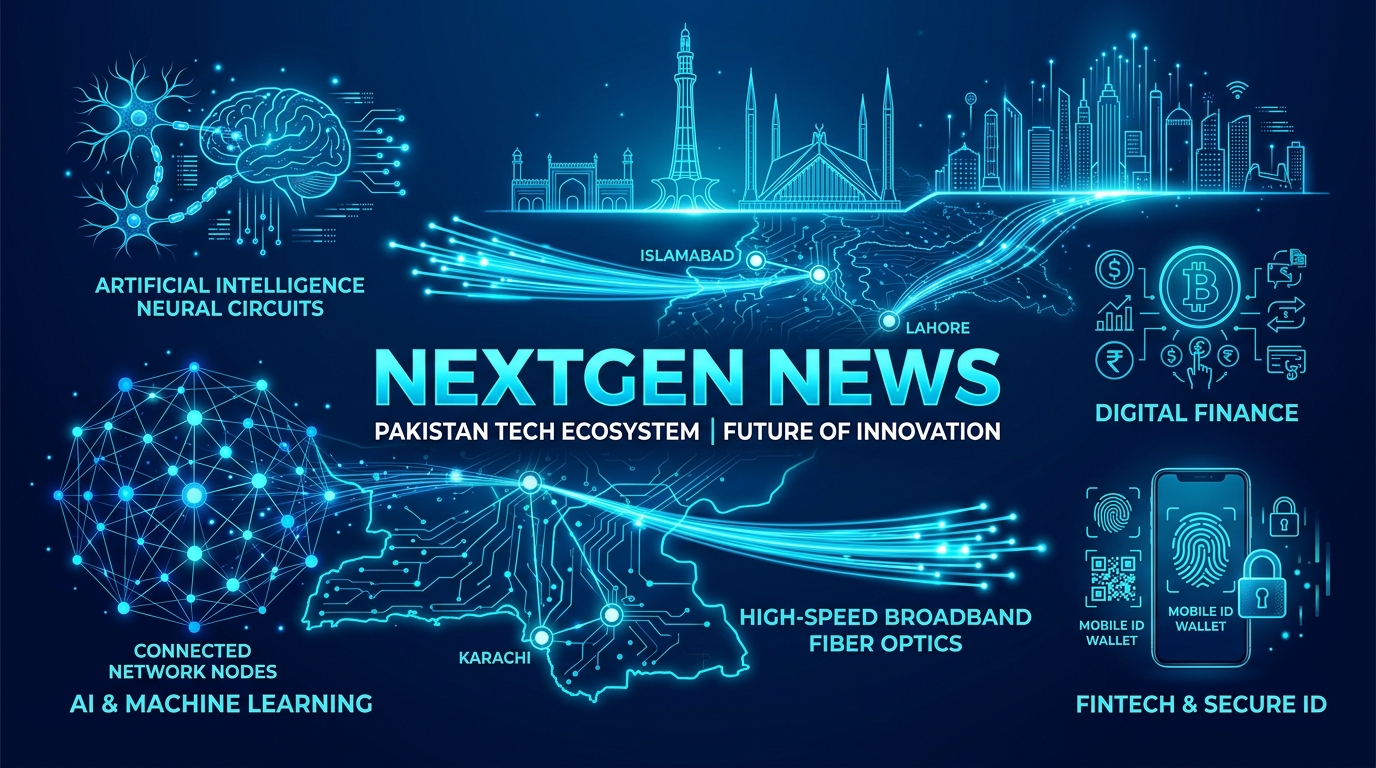
Pakistan’s technological landscape is undergoing a monumental shift in 2026, fueled by forward-looking government policies and a resilient startup ecosystem. The formal implementation of the National AI Policy and the newly introduced National Data Governance Policy 2026 are setting the stage for an unprecedented era of digital transformation.
The National AI Policy: Empowering a New Ecosystem
The government’s proactive rollout of its National AI Policy has placed Pakistan on the regional map for artificial intelligence innovation. The focus has moved beyond traditional IT outsourcing and into high-value product engineering and intellectual property creation.
Key AI Initiatives
- AI Hubs and Centers of Excellence: New infrastructure is being deployed across major cities to support research in generative AI and machine learning.
- AI Seekho 2026: A massive upskilling program aiming to train tens of thousands of young professionals and students in practical AI development, ensuring a robust talent pipeline for local and international tech firms.
- Sector-Specific Integration: AI is actively being integrated into critical sectors, most notably agriculture (for yield prediction and resource management), healthcare (diagnostics), and e-governance.
Pakistan’s prominent footprint at the LEAP 2026 conference in Riyadh signaled its readiness to become a key player in the global AI supply chain, establishing strategic partnerships with Saudi Arabia and China.
E-Governance and the Data Governance Policy 2026
Bureaucracy is being fundamentally rewired with the National Data Governance Policy 2026. Spearheaded by the newly established Pakistan Digital Authority (PDA), this framework aims to make government services secure, efficient, and data-driven.
The “Once-Only” Principle
At the heart of the e-governance push is the “once-only” principle. Citizens will no longer need to repeatedly submit their data across different government departments.
The WASL Data Exchange
To facilitate this, the government has launched the WASL national data exchange platform. This secure infrastructure enables seamless, inter-agency data sharing, vastly reducing processing times for public services. These efforts are visible at the provincial level as well, with the Punjab Assembly moving toward paperless sessions and Lahore successfully digitizing its property records to combat fraud.
Startups: Pivoting to Deep Tech and AI
The startup ecosystem in Pakistan is maturing. Capital constraints over the past few years have forced a healthy correction. Startups are no longer chasing bloated valuations; instead, they are focusing on revenue-backed growth, leveraging hybrid financing models that mix equity and debt.
We are seeing a surge in startups tackling local challenges with cutting-edge SaaS, fintech, and AI-driven solutions. These companies are perfectly positioned to leverage the government’s new digital infrastructure. For businesses looking to scale their AI applications or launch robust digital platforms in this new environment, choosing the right infrastructure is critical. Consider exploring Nextgen’s VPS hosting solutions to ensure your applications have the speed, security, and uptime required in today’s competitive landscape.
Looking Ahead
While challenges remain—particularly in the telecom sector regarding operating costs and infrastructure legislation—the trajectory for Pakistan’s tech industry in 2026 is overwhelmingly positive. With strong data governance, an aggressive AI agenda, and an adaptable startup ecosystem, Pakistan is building a resilient, digital-first economy.
Need Enterprise-Grade Performance?
If your workload demands maximum processing power and zero resource-sharing, explore our bare-metal Dedicated Servers and Dedicated Servers in Pakistan. We offer ultra-low latency, unmetered bandwidth, and enterprise-grade hardware to scale your operations seamlessly.