
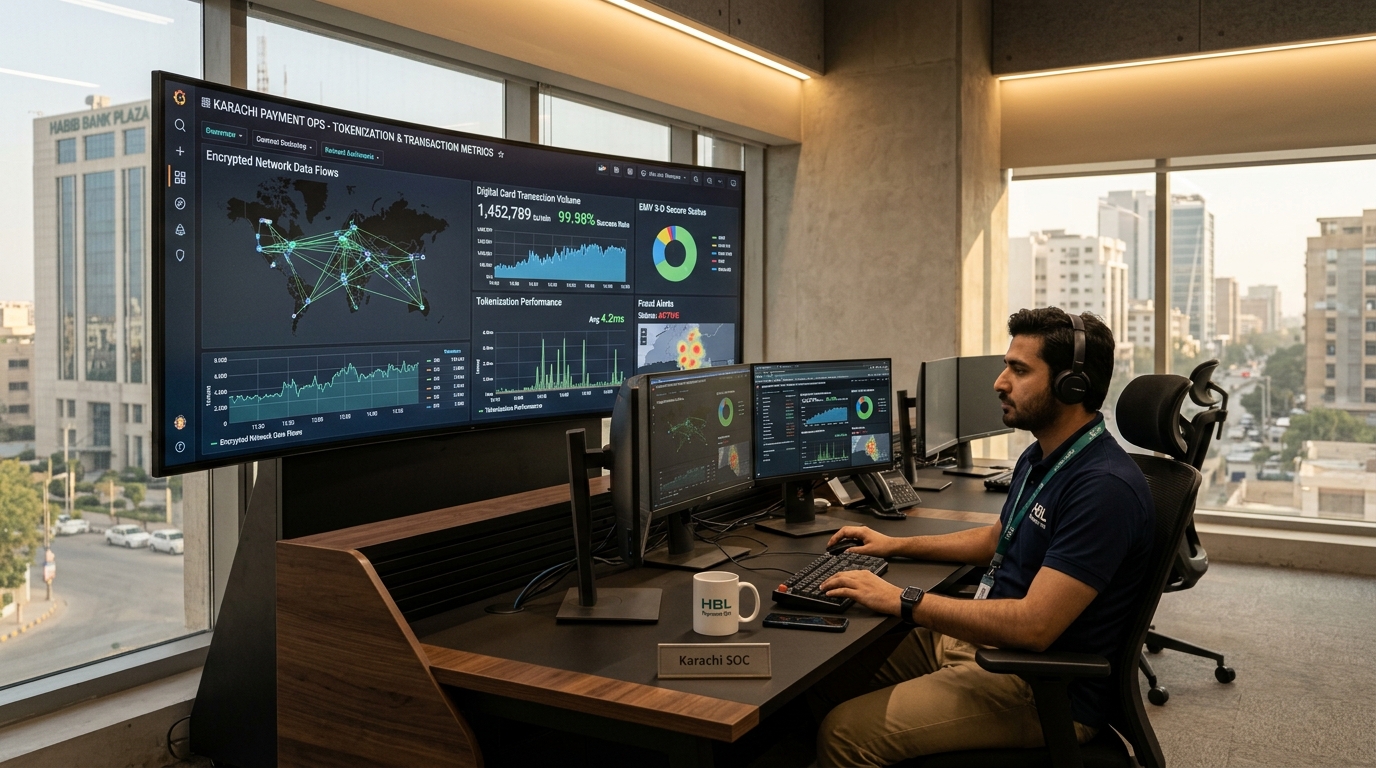
The State Bank of Pakistan (SBP) has formally notified the National Card-on-File (CoF) Network Tokenization Regulatory Framework 2026, executing one of the most consequential digital payment security mandates in the nation’s financial history. Under the binding directive issued by the Payment Systems Policy and Information Technology Department (PSPID), all commercial banks, microfinance institutions, Payment Service Providers (PSPs), Payment System Operators (PSOs), digital acquirers, and online merchants operating across Pakistan are legally prohibited from saving or retaining actual 16-digit cardholder Primary Account Numbers (PANs) and expiration dates within their commercial databases.
Effective immediately, any entity facilitating online recurring subscriptions, rapid checkouts, or saved payment credentials must replace legacy database storage with scheme-level, cryptographically bound network tokens provisioned directly by Visa (Visa Token Service - VTS), Mastercard (Mastercard Digital Enablement Service - MDES), and 1LINK (PayPak Sovereign Token Engine).
This regulatory intervention targets the single largest systemic vulnerability in domestic online retail: distributed, insecure database storage of sensitive payment credentials by thousands of commercial merchants and third-party aggregators.
1. The Security Crisis of Stored Primary Account Numbers (PANs)
Over the past five years, Pakistan’s e-commerce market underwent exponential expansion, crossing $6.8 billion in annual digital transaction volume. However, this growth inherited an antiquated payment storage architecture known as Card-on-File (CoF). To deliver convenient “one-click” checkouts, digital merchants and payment aggregators routinely cached consumers’ raw 16-digit PANs, cardholder legal names, and expiry dates inside relational databases (MySQL, PostgreSQL, or MongoDB clusters).
While global PCI-DSS (Payment Card Industry Data Security Standard) frameworks prescribe rigorous encryption-at-rest and key-management protocols, enforcement across Pakistan’s sprawling retail ecosystem remained uneven. Mid-tier e-commerce businesses, ride-hailing apps, food delivery startups, utility billing aggregators, and digital ticket portals frequently suffered configuration errors, unauthorized internal access, unpatched SQL injections, or unencrypted database backups stored in unprotected cloud buckets.
Legacy Card-on-File Storage vs Scheme Network Tokenization
┌────────────────────────────────────────────────────────────────────────┐
│ LEGACY CARD-ON-FILE MODEL (CRITICAL RISK VECTOR)                       │
│ Customer Card ──> Merchant Web App ──> Merchant Database [Stores PAN]  │
│                                                     │                  │
│                                                     ▼                  │
│                          Single Breach Compromises Card Everywhere     │
├────────────────────────────────────────────────────────────────────────┤
│ SBP 2026 NETWORK TOKENIZATION MODEL (ZERO MERCHANT EXPOSURE)           │
│ Customer Card ──> Card Scheme (VTS/MDES/PayPak) ──> Cryptographic Token│
│                                                            │           │
│                                                            ▼           │
│   Merchant Stores ONLY Non-Sensitive Token Restricted to Merchant Domain │
└────────────────────────────────────────────────────────────────────────┘
The resulting security risks were catastrophic:
- Universal Replay Vulnerability: If a single fashion retailer or subscription delivery service suffered a database dump, the compromised PANs and expiry dates could be reused on arbitrary international or domestic websites that lacked mandatory two-factor authentication (2FA) or 3D-Secure 2.0 gates.
- Credential Stuffing and Dark Web Resale: Stored Pakistani debit and credit cards regularly appeared on illicit dark web credential exchanges, driving substantial chargeback losses for domestic issuing banks such as HBL, Meezan Bank, Bank Alfalah, and MCB.
- Massive Card Replacement Overhead: In the event of a merchant breach, issuing banks were forced to block and reissue hundreds of thousands of physical plastic cards at significant financial and operational expense.
The SBP’s 2026 framework eliminates this risk entirely by ensuring that raw PANs never reside inside merchant server infrastructure after the initial authorization handshake.
2. Architectural Mechanics of Scheme Network Tokenization
Network tokenization differs fundamentally from proprietary, gateway-level tokenization (vaulting). In legacy gateway tokenization, a private payment processor replaces the card number with an internal reference ID, but the gateway itself still stores the actual PAN in a centralized vault, leaving a concentrated target for threat actors.
Under the SBP 2026 mandate, tokens are issued directly by the card schemes (Visa, Mastercard, and 1LINK PayPak) operating as certified Token Service Providers (TSPs). These tokens are globally recognized surrogate values that completely replace the PAN across the entire transaction pipeline.
End-to-End Cryptographic Network Tokenization Flow
┌──────────┐         ┌──────────────┐         ┌──────────────┐         ┌──────────────┐
│ Consumer │         │   Merchant   │         │ Acquirer/PSP │         │ Card Scheme  │
│ Device   │         │ Platform     │         │ Gateway      │         │ VTS/MDES/1LK │
└────┬─────┘         └──────┬───────┘         └──────┬───────┘         └──────┬───────┘
     │ 1. Enter PAN once    │                        │                        │
     ├─────────────────────>│ 2. Tokenize Request    │                        │
     │                      ├───────────────────────>│ 3. Forward TRID & PAN │
     │                      │                        ├───────────────────────>│
     │                      │                        │                        │ 4. Generate Token
     │                      │                        │ 5. Return Token & TRID │    Bind to Domain
     │                      │ 6. Store Token Only    │<───────────────────────┤
     │                      │<───────────────────────┤                        │
     │                      │                        │                        │
     │ 7. Subsequent Order  │                        │                        │
     ├─────────────────────>│ 8. Checkout via Token  │                        │
     │                      ├───────────────────────>│ 9. Request Cryptogram  │
     │                      │                        ├───────────────────────>│
     │                      │                        │ 10. Dynamic TAVV/CAVV  │
     │                      │                        │<───────────────────────┤
     │                      │ 11. Auth Approved      │                        │
     │                      │<───────────────────────┤                        │
Core Cryptographic Building Blocks
- Token Requestor ID (TRID): Every verified merchant or payment aggregator must obtain a registered TRID from each card network. When a token is provisioned, the scheme binds the resulting surrogate number strictly to that TRID. Even if a cybercriminal accesses a merchant database and steals millions of network tokens, those tokens are mathematically useless outside that exact merchant’s domain.
- Dynamic Transaction Cryptograms (TAVV / CAVV): Unlike static CVV/CVC numbers printed on the back of cards, network tokenized checkouts generate a one-time cryptographic proof for every transaction. Visa Token Authentication Verification Value (TAVV) and Mastercard Cryptogram Authentication Verification Value (CAVV) are generated using scheme-level cryptographic keys. A captured cryptogram cannot be replayed for subsequent charges.
- Automated Token Lifecycle Management: One of the most severe operational bottlenecks in recurring payments has been card expiration, card loss, or bank re-issuance. When a bank replaces a user’s lost or expired card, the issuing bank notifies the scheme’s TSP. The scheme instantly updates the underlying mapping without changing the merchant-facing network token. Consumers experience zero interrupted subscriptions or failed checkouts, and merchants never have to prompt the customer to re-enter payment credentials.
- 1LINK PayPak Sovereign Token Engine: For domestic-only PayPak debit cards—which constitute over 18 million active cards across Pakistan—1LINK has deployed the National PayPak Tokenization Engine. Hosted in twin Tier-IV data centers in Karachi and Islamabad, this sovereign infrastructure guarantees that domestic card credentials never leave Pakistani borders for token minting, lifecycle management, or cryptogram validation.
3. Checkout Conversions and Fraud Reduction: SBP Performance Metrics
Prior to the rollout of network tokenization, Pakistani online checkout conversion rates trailed global benchmarks. Customers frequently abandoned shopping carts due to tedious multi-step SMS OTP verification procedures, while issuing banks deployed aggressive heuristic risk models that rejected legitimate domestic e-commerce transactions out of fraud caution.
Pilot data collected by the State Bank of Pakistan across early-adopting commercial acquirers reveals a profound operational transformation:
| Transaction Metric | Legacy Stored Card (PAN) | Network Tokenization (2026 Mandate) | Net Performance Impact |
|---|---|---|---|
| Average Authorization Rate | 64.2% | 88.6% | +24.4% Success Surge |
| Merchant-Side Fraud Liability | 100% Merchant / Acquirer | 0% (Shifted to Scheme / Issuer) | Complete Merchant Protection |
| Checkout Latency | 24 - 45 seconds (Manual OTP) | 3.8 - 6.2 seconds (FIDO2 / 1-Click) | 75% Faster User Flow |
| Card Expiry Churn (SaaS / Subs) | 18.5% annual churn | < 1.2% residual churn | Automated Lifecycle Sync |
| Systemic Data Breach Exposure | High (Unencrypted PANs in DB) | Zero (Cryptographically Inert) | Complete Threat Vector Elimination |
| False-Positive Decline Rate | 14.1% | 2.3% | Major Revenue Recovery |
Because scheme network tokens are cryptographically authenticated directly between the card brand and the issuing bank, banks assign a vastly superior trust score to tokenized requests. The need for disruptive, high-friction out-of-band SMS OTP verification is systematically reduced in favor of risk-based biometric authorization (FIDO2, FaceID, fingerprint recognition), unlocking frictionless one-click checkouts for Pakistani digital retail.
4. Implementation Deadlines and Regulatory Compliance Timelines
The SBP circular sets uncompromising deadlines for every segment of Pakistan’s financial and commercial technology ecosystem. Entities failing to achieve compliance face immediate revocation of acquiring privileges and administrative penalties under the Payment Systems and Electronic Fund Transfers Act.
SBP Card-on-File Tokenization Compliance Roadmap
┌─────────────────┬──────────────────────────────────────────────────────┐
│ Milestone Date  │ Mandatory Industry Deliverable                       │
├─────────────────┼──────────────────────────────────────────────────────┤
│ Q1 2026 (Passed)│ Core Banking & Switch Readiness for VTS, MDES, PayPak │
├─────────────────┼──────────────────────────────────────────────────────┤
│ August 1, 2026  │ Top-Tier PSPs & Acquirers Deprecate New PAN Storage │
├─────────────────┼──────────────────────────────────────────────────────┤
│ November 15, 2026│ Enterprise Platforms (Daraz, Foodpanda, Careem) Live  │
├─────────────────┼──────────────────────────────────────────────────────┤
│ December 31, 2026│ Mandatory Purge: Zero Raw PANs Retained Nationwide   │
└─────────────────┴──────────────────────────────────────────────────────┘
Entity-Specific Obligations
- Commercial Acquirers (HBL, Bank Alfalah, MCB, Meezan Bank): Must complete direct API integrations with Visa Token Service, Mastercard MDES, and 1LINK PayPak TSP. Acquirers must provide software development kits (SDKs) and drop-in checkout iframes to their merchant portfolios by mid-Q3 2026.
- Payment Service Providers (PSPs) & Payment System Operators (PSOs): Aggregators including JazzCash, Easypaisa, NIFT ePay, PayFast, and Kuickpay must certify their gateway proxy middleware as compliant Token Requestors. They are forbidden from returning raw PANs to merchants in webhook responses or API callbacks.
- Enterprise Merchants (Daraz, Foodpanda, Careem, Indrive, AirSial): Must migrate their existing customer card vaults. Historical databases must be securely decrypted, transmitted to TSPs for batch token generation, and the original PAN records permanently purged using cryptographic data sanitization (DoD 5220.22-M or NIST SP 800-88 standards).
- SME & Open-Source Merchants (Shopify, WooCommerce, Magento): Acquirers must provide pre-certified, token-ready checkout plugins. Small online retailers are barred from handling card fields directly; card input forms must be rendered using hosted scheme tokenization fields that communicate directly with acquirer APIs.
5. The Infrastructure Imperative: Low-Latency Bare-Metal Architecture
While the cryptographic mathematics of network tokenization offer unprecedented security, they introduce stringent architectural demands on server infrastructure.
In a legacy payment flow, an e-commerce backend simply saved an encrypted string into a local database table. Under network tokenization, a payment transaction requires real-time, multi-hop cryptographic handshakes:
- The merchant backend requests a dynamic cryptogram for the customer’s stored token.
- The proxy gateway verifies the TRID against the scheme token directory.
- The TSP validates the merchant’s cryptographic signature and issues a dynamic TAVV/CAVV with a strict, millisecond-level time-to-live (TTL).
- The payment gateway packages the token and cryptogram into an ISO 8583 / ISO 20022 message and forwards it to the domestic acquiring switch.
Token Cryptogram Verification Latency Budget (Target: < 800ms Total)
┌────────────────────────────────────────────────────────────────────────┐
│ DOMESTIC BARE-METAL INFRASTRUCTURE (RECOMMENDED ARCHITECTURE)          │
│ App Server ──[2ms]──> Gateway Proxy ──[12ms]──> 1LINK/Scheme Switch    │
│ Total RTT: < 50ms | Zero Cryptogram Expiry | 99.99% Transaction Success│
├────────────────────────────────────────────────────────────────────────┤
│ OVERSEAS MULTI-TENANT PUBLIC CLOUD (HIGH FAILURE RISK)                 │
│ Overseas VM ──[180ms]──> Transit Proxy ──[160ms]──> Domestic Switch    │
│ Total RTT: > 1,200ms | Jitter Timeouts (>5,000ms) | Failed Payments   │
└────────────────────────────────────────────────────────────────────────┘
If the merchant application or token requestor proxy is hosted on high-latency overseas public clouds (such as AWS eu-west or GCP us-central), trans-oceanic network latency, routing hops, and subsea cable instability can introduce 150ms to 350ms of network overhead per roundtrip. In complex multi-hop token lookups, total transaction latency frequently exceeds 4,000ms to 5,000ms. When network jitter pushes round-trip times past the strict scheme cryptogram expiry threshold, transactions fail with ambiguous timeout errors, frustrating shoppers and inflating cart abandonment.
Furthermore, multi-tenant public virtualization introduces hypervisor “noisy-neighbor” CPU jitter during peak shopping campaigns (such as 11.11, Blessed Friday, or Eid clearance sales), causing cryptographic payload signing routines to queue and fail.
To satisfy both the SBP’s strict data sovereignty directives and the sub-second latency tolerances of network tokenization, tier-1 payment gateways, fintech acquirers, and high-volume e-commerce platforms are deploying their token proxy layers on high-performance Dedicated Servers.
For organizations handling sensitive financial workloads within national borders, deploying localized Dedicated Servers in Pakistan hosted inside Tier-3 and Tier-4 certified data centers provides:
- Sub-15ms Domestic Latency: Direct peering with the Pakistan Internet Exchange (PKIX), 1LINK switch, and all domestic telecom backbones (PTCL, Nayatel, Transworld, StormFiber).
- Dedicated Hardware Security Module (HSM) Interfacing: Direct bare-metal PCIe passthrough or isolated rack-level network attachments to FIPS 140-2 Level 3 certified HSM appliances for scheme key management and high-throughput payload signing.
- Guaranteed Compute Determinism: 100% dedicated physical CPU cores without hypervisor contention, ensuring consistent cryptographic hash generation even under sustained loads exceeding 10,000 requests per second.
- Sovereign Regulatory Alignment: Full compliance with SBP data localization guidelines, ensuring all consumer financial records and token requestor audit logs reside permanently on Pakistani soil.
6. Technical Migration Checklist for Pakistani Tech Teams
Engineering leads, CTOs, and payment architects must take immediate action to align their software architectures with the SBP 2026 framework:
Architecture and Code Audits
- Conduct an exhaustive codebase scan for regex patterns matching card number formats (
^4[0-9]{12}(?:[0-9]{3})?$,^5[1-5][0-9]{14}$, etc.) across application code, SQL migration files, logging configurations, and debugging dumps. - Deprecate custom card collection forms; integrate certified JavaScript SDKs provided by your payment acquirer that tokenize card data directly in the customer browser before payloads reach your server.
Database Deprecation
- Build automated data pipeline scripts to extract historical Card-on-File tables, dispatch them to card scheme batch tokenization endpoints via secure mTLS connections, and persist the returned network tokens alongside their respective TRIDs.
- Once migration confirmation is received from the acquirer, execute verified zero-fill cryptographic purges of legacy PAN columns and unmount unencrypted historical database snapshots.
Infrastructure Resilience
- Decouple payment processing microservices from general web application pools; host payment proxies and tokenization proxies on dedicated, hardened bare-metal servers physically situated within domestic data centers.
- Implement robust telemetry for dynamic cryptogram lifetimes, monitoring network round-trip time (RTT) to ensure cryptogram generation and authorization completion execute within an 800ms SLA.
Power Low-Latency Financial Workloads with Pakistan Dedicated Servers
Meeting SBP tokenization mandates requires zero-jitter compute, hardware-level isolation, and direct low-latency peering with Pakistan's financial switches. Nextgen Hosting delivers dedicated bare-metal servers hosted in accredited domestic facilities with unmetered domestic bandwidth and 99.99% uptime SLAs.
Related Technical Analysis & Regulatory Guides
- SECP Digital Lending Framework 2026: Cloud Hosting & Data Sovereignty Mandates
- PCI-DSS v4.0 Compliance Checklist for Pakistani Payment Gateways and E-Commerce
- How to Set Up Low-Latency Domestic API Gateways for Fintech Applications
- Enterprise Bare-Metal Dedicated Servers in Pakistan
- High-Performance Dedicated Server Solutions
- Cloud VPS Infrastructure Peered with PKIX